Reniel Del Rosario: Barotoy’s Tiki n’ Trading Post
November 7, 2026 – February 14, 2027
OPENING RECEPTION
Saturday, November 7 from 7 – 10PM
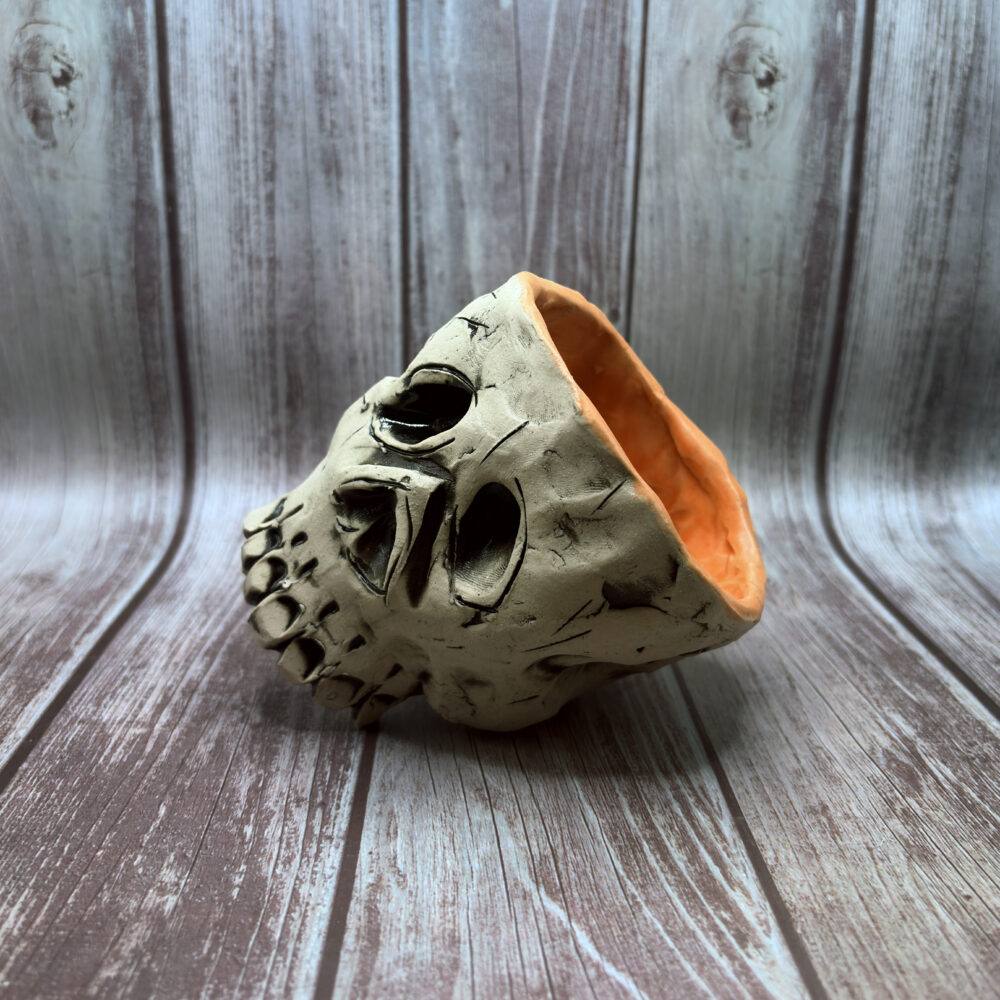
Barotoy’s Tiki n’ Trading Post is an installation by Los Angeles-based artist Reniel Del Rosario that examines exotification, conquest, and erasure through the context of a fictionalized tiki bar.
The American imperial conquest of the Pacific is a long history that began in the mid-1800s with the Guano Islands Act that enabled the proclamation of land in the Caribbean Sea and Pacific Ocean to become American territories, but ultimately excelled in the 1900s through various wars, colonial pursuits, annexations, and resourcing of materials. The beloved tiki bar is a product of these events. Tiki bars are themed establishments that cater towards a romanticized lens of tropical culture and escapism. What this tropical culture is exactly varies from establishment to establishment as well as through the years. It could be Hawaiian, Polynesian, Oceanian, Southeast Asian, and any other populus within the Pacific Ocean. Often, it is a combination of these cultures, in addition to nautical and naval elements, fused together into an exotified, othered creation that is accepted as ‘tiki.’
Del Rosario became invested in tiki culture upon discovering the cultural connection between the Philippines and tiki. Filipino workers were crucial in the rise of tiki bars, particularly in the Los Angeles region, namely the ‘Four Boys’ who were Filipino immigrants that eventually worked at Don the Beachcomber, the arguable ‘origin’ of any tiki bar. These bartenders, immigrating from a newly acquired and unfamiliar American territory, fit perfectly into scope of tiki exotification as workers from another land creating concoctions unknown. American Naval presence in the Pacific during World War II exacerbated this romanticization—cities near old naval bases in the Philippines have multitudes of bars that catered towards the foreign Pacific theme many naval men sought out. Many of these tiki bars still exist today. Despite this, the Philippines is often in the shadows of tiki. They were not part of the original Pacific craze of the 1800s, but they eventually became intertwined with its legacy. Tiki, as it is known today, is pure escapism—it is a fictional realm that exists for camp, hedonism, and make believe. It is akin to a theme park—you know it’s not really Mickey Mouse at Disneyland, but you pretend in the moment that the head honcho of Disney is in your presence. Despite this, the deep origins of Pacific-fascination and exoticism are still integral to the phenomenon.
Within this installation, Del Rosario presents viewers with a multitude of objects that nod to the history of his birth country, US intervention on the islands, and the long-term effects of the former. These objects include but are not limited to: tiki mugs, ceramic wooden masks, ceramic anchor chains, clay paintings depicting old family photos, and ceramic figures. Additionally, the exhibition title utilizes the word “Barotoy”, a regional term from Zambales. Barotoy is a word for a male baby when the more widely known and used term ‘totoy’ is already given to the first-born male child. Barotoy essentially translates to second born male child. This is a reference to Del Rosario’s familial birth order as he is his father’s second son and the second-born male within his generation of cousins.
The Philippines, to the artist, is a country of erasure—a victim of waves of varying colonizing forces erasing families, names, practices, and information that is lost to time and violence. Barotoy’s Tiki n’ Trading Post is meant to be the artist’s reaction against such loss—Del Rosario wants to confront it all and remember it all, less that history becomes like the majority of the Four Boys and lost in history.
ABOUT THE ARTIST
Reniel Del Rosario (b. Iba, Philippines) is an artist that primarily uses ceramics, quantity, and satire to discuss themes of commodification and value. He holds a BA in Art Practice from the University of California at Berkeley. He is a 2019 recipient of the Center for Craft’s Windgate-Lamar fellowship, a 2022 SFMOMA Artists Soapbox Derby racer, and a 2025 NCECA Emerging Artist. Del Rosario has been an artist-in-residence at Sonoma Ceramics, Meta Open Arts, Fountainhead, the American Museum of Ceramic Art, and Laguna Clay Company. His work has been featured in writings such as ARTFORUM, Sculpture Magazine, and Bon Appetit. Del Rosario’s work has been exhibited extensively internationally through traditional and alternative venues such as West Coast Craft, the Contemporary Art Museum St. Louis, Catharine Clark Gallery, Load Na Dito, Praise Shadows Art Gallery, the San Francisco Museum of Modern Art, Jane Lombard Gallery, Primary, and simply on the public sidewalk.
CURATOR
This exhibition is curated by Bella Marinos, GCAC Curatorial Associate.